


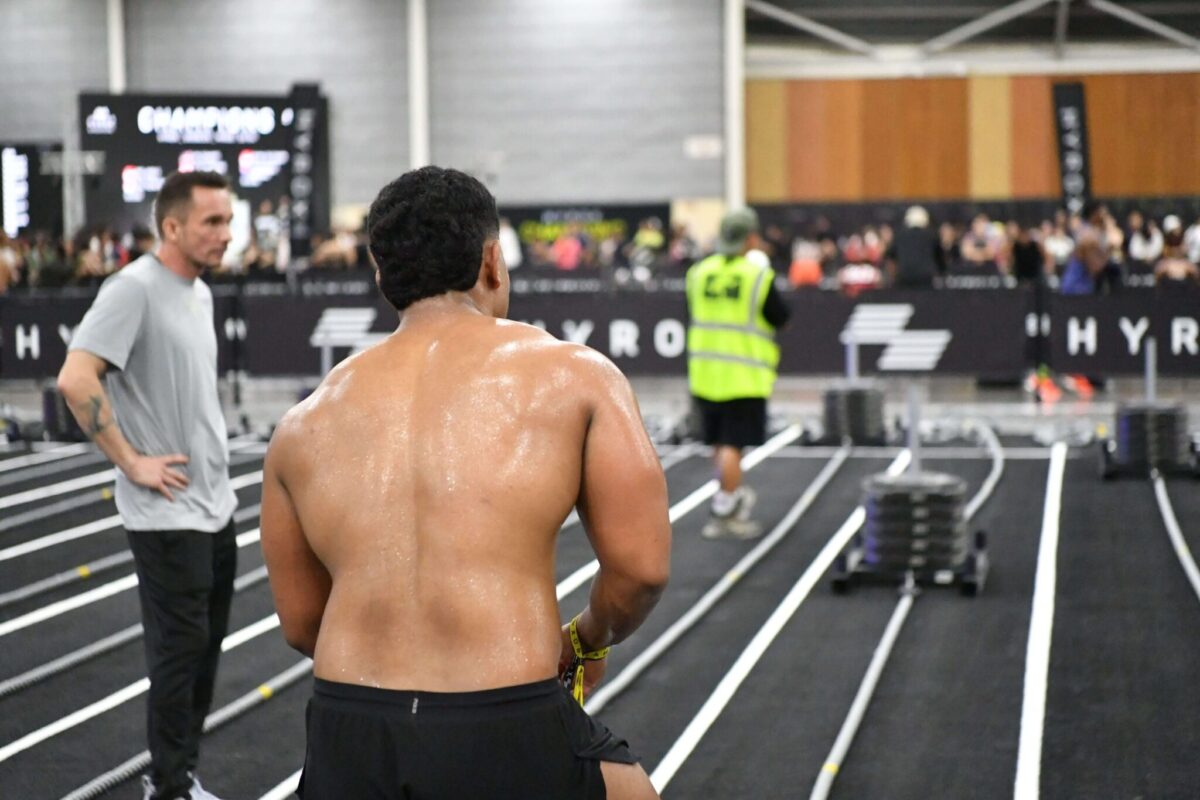
Are You Ready for Hyrox? The Complete Preparation Guide
Hyrox has grown fast and continues to expand rapidly. What started as a niche fitness race has become one of the most popular events on the UK sporting calendar, with sold-out heats in cities from Manchester to London as well as all across the globe, consisting of athletes ranging from first-timers to seasoned competitors lining up at the same start line.
The format is straightforward enough on paper; eight one-kilometre runs, each split up by a functional workout station in between, following the order of: ski-erg, sled push, sled pull, burpee broad jumps, rower, farmer's carry, sandbag lunges and wall balls.
In practice, it is one of the most demanding things you can ask your body to do. The running alone would be manageable. The stations alone would be manageable. Doing them together, under cumulative fatigue, is a different challenge entirely.
Getting ready for Hyrox properly means thinking about four things: your training kit, your injury prevention, your race day preparation, and your recovery. Here is an overview of each.
Training Kit That Actually Gets Used
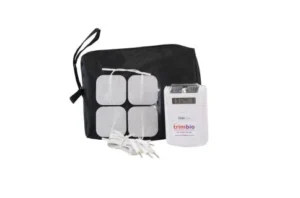
You do not need a gym full of equipment to assist preparation for a Hyrox at home. What you do need is a small collection of things that support the work between sessions: resistance bands for muscle group activation and prehab, primarily and most importantly the glutes and hip flexors, however these are beneficial for the whole body considering the nature of this full body workout, when used effectively. A foam roller to manage the volume in your legs, a TENS machine for when soreness is affecting sleep or next-day training, and hot and cold packs for managing acute flare-ups and to aid recovery between sessions.
These are not nice-to-haves. They are the tools that keep you training consistently across an 8 to 12 week block, which is the single biggest factor in how well you perform on race day.
Read more: The Hyrox Training Kit You Can Use at Home Between Sessions
Protecting Your Knees and Hips
The sandbag lunges are where a lot of Hyrox athletes run into trouble. One hundred metres of weighted isolated leg work, usually arriving when the legs are already tired, due to its placement in the race being second to last of the stations. This results in significant compressive load through the patellofemoral joint and eccentric stress through the hip flexors.
The good news is that most Hyrox-related knee and hip pain is preventable. Resistance band prehab targeting the glutes and hip abductors and flexors is the most evidence-backed approach, and it takes five minutes a day. Kinesiology tape and a knee support can help manage load during training if discomfort has already started.
Read more: Why Your Knees and Hips Hate Sandbag Lunges (And What to Do About It)
 |
 |
| Shop: Resistance loops at trimbio | Shop: Kinesiology tape at trimbio |
What to Pack on Race Day
Race day organisation is easy to overlook during a training block and easy to regret on the morning. A few practical items in your bag makes a real difference: kinesiology tape cut the night before, a resistance loop for warm-up activation, an instant ice pack or Biofreeze Gel for anything that flares up during or after the race, this can only be used post-race not during and aids the initial start to the recovery process, and something familiar to eat and drink.
The warm-up matters more than most people think. Five minutes of banded glute work before you start sets the hips and knees up to track correctly through the sled stations and lunges. It is the most effective insurance policy you can take out.
Read more: What to Pack in Your Hyrox Race Day Bag
 |
Recovery After the Race
 |
| Shop: Foam roller at trimbio |
Hyrox produces DOMS. That is not a sign that something went or is wrong. The sled pull, sandbag lunges, and wall balls all involve heavy eccentric loading and the combination of these straight into and out of a run repeatedly on gradually fatiguing legs, will produce the soreness that peaks 24 to 48 hours later and this is a normal physiological response to that stimulus.
What matters is what you do with it. Light movement, foam rolling, heat from day two, cold in the immediate aftermath, and a TENS machine for pain management are all practical and effective. Most athletes are back to light training within five to seven days and full intensity by ten.
Read more: DOMS After Hyrox: What is Normal and What Isn't
 |
 |
|
| Shop: Hot and cold packs at trimbio | Shop: TENS One Machine at trimbio |
|
One More Thing
trimbio supplies all the recovery and training kits referenced throughout this series.
Browse: Full range at trimbio.co.uk