


New Research: What's the Optimum Treatment Time for Trimwave H-Wave Therapy in Horses?
A 2022 Harper Adams University study set out to answer that question directly, using the Trimwave. The research was carried out by Madeline (Maddie) Wigley, supervised by Helen Morrell and Zoe Davies, as part of a BSc (Honours) Veterinary Physiotherapy degree. We're sharing the findings here because they offer genuinely practical guidance for anyone using H-wave therapy in equine rehabilitation.
Back problems, often resulting in pain through the Longissimus dorsi muscle, are common and often less likely to be treated in horses. Back pain in working horses is highly prevalent with an estimation of 27-100% experiencing this. The Longissimus dorsi muscle is essential in stabilising the vertebral column whilst facilitating locomotion. This muscle is likely to be overworked as muscle activity often peaks during push off from the ipsilateral hindlimb meaning horses will experience discomfort when using this muscle in their daily routines. This stresses the need for H-wave therapy to be explored as it may be an essential tool in eliciting a physiological response to soft tissue injuries and neuropathies. There is little recent data and research to further confirm these findings which highlights a gap in this area. The Trimwave by Trimbio is a new therapy unit that delivers H-Wave therapy by working in the same way as the H-Wave® does but with a wider range of frequencies. The Trimwave works on a range of 2-200Hz which includes the traditional low frequency (2Hz) to target muscle stimulation and higher frequencies (60Hz) aiming to induce pain relief by having an analgesic/anaesthetic effect. Chronic pain and inflammation are targeted through lower frequencies by directly stimulating skeletal and smooth muscle fibres of the lymphatic system which eliminates the accumulation of proteins that lead to inflammation. Several published works examining the use of HWave therapy on rats have highlighted the benefit of low frequencies in increasing blood circulation in the smallest blood vessels, microcirculation, which leads to a profound increase in blood flow within skeletal fibres. Higher frequencies target pain relief through analgesic effects that reduce the function of the sodium pump within nerve fibres. The use of electrical stimulation to control pain and restore function has become increasingly researched within the past two decades and, from the limited H-wave therapy studies available, it is evident that it reduces inflammation whilst promoting enhanced healing and recovery, particularly in humans. H-wave therapy has been proven to significantly increase blood flow during 2Hz stimulation and which results in increased blood vessel formation, angiogenesis, in rodent hindlimbs. There is a lack of recent, updated evidence to support the use of these waveforms in equine treatments. Current research on H-wave therapy utilises treatment times from 30-60 minutes and there is limited research on application times less than this. Alongside this, the timer on the Trimwave ranges from 1-30 minutes and the study focused on application times within this range. Fundamentally, current data is varied and there are few studies, if any, that discuss the most optimal application time and consequently this will be identified within this study. H-wave therapy induces physiological responses by using biphasic waveform that is exponentially decaying. The waveform causes non-fatiguing, low-tension contractions by using high frequencies to inhibit nerve action potentials by deactivating sodium channel pumps, creating a long-lasting analgesic effect. The mechanism behind H-waveform is the Hoffmann reflex (H-reflex); an electrically induced reflex that is equivalent to the spinal stretch reflex. The Trimwave stimulates the Hoffman reflex and causes action potentials to travel along afferent fibres to alpha motoneurons. Following this stimulation, the efferent portion of the Hoffman reflex results from action potentials generated by these motoneurons that travel to the neuromuscular junction which produce a twitch response. The H-waveform is natural to the body meaning a lower current is required for muscle stimulation. Other electrotherapies, such as transcutaneous electrical nerve stimulation (TENS), have been heavily researched in humans; particularly with chronic pain but there is also growing evidence for targeting acute pain. When H-wave therapy is utilised at high frequencies, 16Hz and above, the results are similar to the effects that TENS produces. TENS activates the pain gate mechanism, in a similar way to H-waveform, and primarily targets symptomatic pain relief by exciting sensory nerves. There is an abundance of data supporting the use of TENS for chronic low back pain, muscle pain, muscle tension and post-exercise soreness in both animals and humans. A recent report showed that TENS was used in 29.2% of treatments for common procedures, proving that professionals believe it to be an effective electrotherapy.
When using the Trimwave there are various frequencies available including lower frequencies to induce muscle stimulation and higher frequencies to induce analgesic effects (16-200Hz) which is similar to the effect of TENS particularly around 100Hz. TENS machines use biphasic waveforms which reduces the risk of adverse skin reactions and is analogous with H-waveform. Both H-waveform and TENS provide more effective pain relief at a greater frequency; 100Hz has been documented in the use of TENS in humans as this is tolerable and stimulates Aβ sensory fibres and results in pain relief. The research into H-wave therapy has been proven to reduce pain, restore functionality and ultimately result in the reduction of medication use in a wide range of disorders. Utilising electrotherapies, such as the H-wave therapy, are crucial within the veterinary industry as they target pain relief whilst reducing the use of opioids. The use of opioids in horses is controversial as clear effects have not been revealed and there are significant side effects associated with an increased dose of opioids, which is concerning. The more research there is on electrotherapies as treatment options the better the chances of reducing opioid use. Although back pain in horses has been found to have high prevalence, it has also been shown to be difficult to evaluate. Pressure algometry is an objective tool used to quantify musculoskeletal pain or sensitivity and has been used in both human and equine studies. Pressure is administered with the algometer and is gradually increased until the horse shows an avoidance reaction which is also referred to as the mechanical nociceptive threshold (MNT). A lower MNT value would signify more sensitivity whilst higher MNT values signify less pain and sensitivity. Previous studies have depicted scientific evidence for objective evaluation of neck and back musculoskeletal (MSK) sensitivity in horses, however, pressure algometry has also been proven to be a successful objective tool to quantify MSK responses and will be beneficial within this study. The algometer has been used conjunctively with diagnostic palpation by a physiotherapist to assess its reliability and it is a well-tolerated method to measure pain in horses but factors that affect results should be considered.
The algometer is crucial during subjective pain assessment and the algometer provides an objective assessment method which has been useful in many studies due to its non-invasive character.
Careful consideration is required when using the algometer as it elicits a pain response when recording MNT values and this was considered for all readings. Due to the lack of data on H-wave therapy, this study aimed to assess which application time from the Trimwave would be most beneficial in reducing sensitivity through the Longissimus dorsi muscle bilaterally adjacent to the midline in horses. A frequency was used that would result in an analgesic effect and a pressure algometer was the objective tool used to assess the change in sensitivity of the Longissimus dorsi muscle post treatment.
The use of electrical stimulation to control pain and restore function has become increasingly researched within the past two decades and, from the limited H-wave therapy studies available, it is evident that it reduces inflammation whilst promoting enhanced healing and recovery, particularly in humans. H-wave therapy has been proven to significantly increase blood flow during 2Hz stimulation and which results in increased blood vessel formation, angiogenesis, in rodent hindlimbs. There is a lack of recent, updated evidence to support the use of these waveforms in equine treatments. Current research on H-wave therapy utilises treatment times from 30-60 minutes and there is limited research on application times less than this. Alongside this, the timer on the
Trimwave ranges from 1-30 minutes and the study focused on application times within this range. Fundamentally, current data is varied and there are few studies, if any, that discuss the most optimal application time and consequently this will be identified within this study.
H-wave therapy induces physiological responses by using biphasic waveform that is exponentially decaying. The waveform causes non-fatiguing, low-tension contractions by using high frequencies to inhibit nerve action potentials by deactivating sodium channel pumps, creating a long-lasting analgesic effect. The mechanism behind H-waveform is the Hoffmann reflex (H-reflex); an electrically induced reflex that is equivalent to the spinal stretch reflex. The Trimwave stimulates the Hoffman reflex and causes action potentials to travel along afferent fibres to alpha motoneurons. Following this stimulation, the efferent portion of the Hoffman reflex results from action potentials generated by these motoneurons that travel to the neuromuscular junction which produce a twitch response. The H-waveform is natural to the body meaning a lower current is required for muscle stimulation. Other electrotherapies, such as transcutaneous electrical nerve stimulation (TENS), have been heavily researched in humans; particularly with chronic pain but there is also growing evidence for targeting acute pain. When H-wave therapy is utilised at high frequencies, 16Hz and above, the results are similar to the effects that TENS produces. TENS activates the pain gate mechanism, in a similar way to H-waveform, and primarily targets symptomatic pain relief by exciting sensory nerves. There is an abundance of data supporting the use of TENS for chronic low back pain, muscle pain, muscle tension and post-exercise soreness in both animals and humans. A recent report showed that TENS was used in 29.2% of treatments for common procedures, proving that professionals believe it to be an effective electrotherapy.
When using the Trimwave there are various frequencies available including lower frequencies to induce muscle stimulation and higher frequencies to induce analgesic effects (16-200Hz) which is similar to the effect of TENS particularly around 100Hz. TENS machines use biphasic waveforms which reduces the risk of adverse skin reactions and is analogous with H-waveform. Both H-waveform and TENS provide more effective pain relief at a greater frequency; 100Hz has been documented in the use of TENS in humans as this is tolerable and stimulates Aβ sensory fibres and results in pain relief. The research into H-wave therapy has been proven to reduce pain, restore functionality and ultimately result in the reduction of medication use in a wide range of disorders.
Utilising electrotherapies, such as the H-wave therapy, are crucial within the veterinary industry as they target pain relief whilst reducing the use of opioids. The use of opioids in horses is controversial as clear effects have not been revealed and there are significant side effects associated with an increased dose of opioids, which is concerning. The more research there is on electrotherapies as treatment options the better the chances of reducing opioid use. Although back pain in horses has been found to have high prevalence, it has also been shown to be difficult to evaluate. Pressure algometry is an objective tool used to quantify musculoskeletal pain or sensitivity and has been used in both human and equine studies. Pressure is administered with the algometer and is gradually increased until the horse shows an avoidance reaction which is also referred to as the mechanical nociceptive threshold (MNT). A lower MNT value would signify more sensitivity whilst higher MNT values signify less pain and sensitivity. Previous studies have depicted scientific evidence for objective evaluation of neck and back musculoskeletal (MSK) sensitivity in horses, however, pressure algometry has also been proven to be a successful objective tool to quantify MSK responses and will be beneficial within this study. The algometer has been used conjunctively with diagnostic palpation by a physiotherapist to assess its reliability and it is a well-tolerated method to measure pain in horses but factors that affect results should be considered.
The algometer is crucial during subjective pain assessment and the algometer provides an objective assessment method which has been useful in many studies due to its non-invasive character. Careful consideration is required when using the algometer as it elicits a pain response when recording MNT values and this was considered for all readings. Due to the lack of data on H-wave therapy, this study aimed to assess which application time from the Trimwave would be most beneficial in reducing sensitivity through the Longissimus dorsi muscle bilaterally adjacent to the midline in horses. A frequency was used that would result in an analgesic effect and a pressure algometer was the objective tool used to assess the change in sensitivity of the Longissimus dorsi muscle post treatment.
Why treatment time matters
This study was approved by the institutional ethics and welfare board at Harper Adams University before data was collected. A pilot study was conducted prior to this to determine several factors that would be used during data collection.
A Latin square design was chosen as this study has more than one blocking factor; this design removes variation within these factors. Each horse represented a row, and each treatment application time represented a column. This meant only four horses were needed as there were four different lengths of treatment. Each horse was its own control which standardised results whilst minimising the number of horses required. All four horses received the same treatments by the end but at different times and in different orders. Each horse started with a different treatment time but the order they were treated in remained the same throughout.
| Horse | 1st Treatment | 2nd Treatment | 3rd Treatment | 4th Treatment |
| 1 | 10 mins | 20 mins | 30 mins | SHAM |
| 2 | 20 mins | 30 mins | SHAM | 10 mins |
| 3 | 30 mins | SHAM | 10 mins | 20 mins |
| 4 | SHAM | 10 mins | 20 mins | 30 mins |
The Latin Square Design for this study showing which horse had which treatment during each session and the order in which they received treatments.
Four horses were selected at random from the barren broodmares at Tremlows Stud Farm in Whitchurch, Shropshire. Four horses were used as this was thought to be the minimum required to test four different application times and this followed the reduction aim of the NC3Rs to reduce the number of live animals used per study. All horses had no underlying conditions or illnesses and were considered healthy by a vet. On the day of each treatment each horse was checked, by the same individual, for any new injuries that may lead to exclusion from the study to ensure they remained suitable. Horses were 10-11 years old, 16.2-16.3hh and varied breeds. Individuals were kept in pens with around five other horses and chosen horses came from two different pens. These horses did not undergo a specific training routine. All horses tolerated treatment and were comfortable being clipped prior.
A Wagner pressure algometer (FPX 25, Wagner Instruments, Greenwich, CT, USA) was used along the Longissimus dorsi muscle which detects a response to an applied mechanical stimulus within tissues and records the pressure applied to elicit a response. Readings were taken prior to and post treatment from the Trimwave device (Trimbio, Unit 6b Mulberry Trading Estate, Foundry Lane, Horsham, West Sussex, RH13 5PX). The Trimwave device produces a bipolar exponential decaying waveform to enable the penetration of low currents into superficial and deep tissues. A frequency of 30Hz was chosen as this was well tolerated in the pilot study and was halfway between the standard settings, 2-60Hz, which have been evaluated in previous studies. Four skin electrodes attached to leads were used, supplied by Trimbio, and these were placed bilaterally around T10 and L5. Electricity flows between pairs of electrodes in straight lines meaning each side is exposed to different channels. Intensity was increased in both circuits simultaneously. 3ml conducting electrode gel (260g, Trimbio) was used between electrodes and the skin to ensure a viable connection and reduce impedance but this gel was removed prior to readings to improve accuracy. Hwave therapy was delivered at an intensity that produced a visible muscle contraction whilst being tolerated – this varied with each individual but ranged from 28-37. Treatment times included 10, 20 and 30 minutes, with a 20-minute SHAM treatment where the pads were placed on the skin, but the machine remained off. All readings and treatments were administered by the same clinician. The same person held each horse during treatment to observe any reactions to treatment.
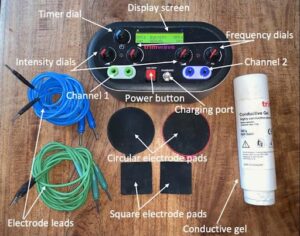
The Trimwave device and accessories used in the study: timer, frequency and intensity dials, electrode pads, leads and conductive gel.
How the study was carried out
A pilot study was conducted prior to data collection where a wash out period of three days was trialled to see if MNT values had returned to the baseline three days after only one treatment. The pilot proved that three days was a sufficient period to allocate as the washout period and was implemented as the time between each treatment for each horse. Treatment took place on the first treatment day which was followed by readings at intervals and then by a 3 day wash out period before the second set of treatments. This pattern continued for all treatment days and data collection took just under 2-weeks. Readings were taken before treatment and then immediately after, 1 hour post, 2 hours post, and 24 hours post treatment. Algometry readings were taken by the same clinician to observe the response; however, they were not blinded as the same person taking the readings recorded them. The clinician would apply pressure to each point with the algometer until the horse’s ears moved backwards or a visible skin twitch was seen at which point the algometer would be removed and the reading recorded. Each horse was clipped in 6x10cm2 square patches 10cm either side of T10, T17 and L5. Algometry readings were taken 3 times in the centre of the clipped patches to calculate a mean. During treatments horses were closely monitored for signs of discomfort and the intensity was adjusted accordingly. Treatments were administered in individual stables and horses remained here throughout the readings
The mean MNT value for each point along the Longissimus dorsi muscle was calculated and the difference between the baseline reading and readings at various times post treatment were calculated. A greater, positive, difference in readings showed an increase in tolerated pressure through that point which would highlight a reduction in pain on pressure application.
All horses’ readings from the 6 points along the Longissimus dorsi muscle showed an increase in MNT values following H-wave therapy treatment for all horses. When a repeated measures analysis of variance (ANOVA) was performed which included all points along the muscle, the position along the back proved not to be statistically significant (P>0.001).
All horses’ readings from the 6 points along the Longissimus dorsi muscle showed an increase in MNT values following H-wave therapy treatment for all horses. When a repeated measures analysis of variance (ANOVA) was performed which included all points along the muscle, the position along the back proved not to be statistically significant (P>0.001).
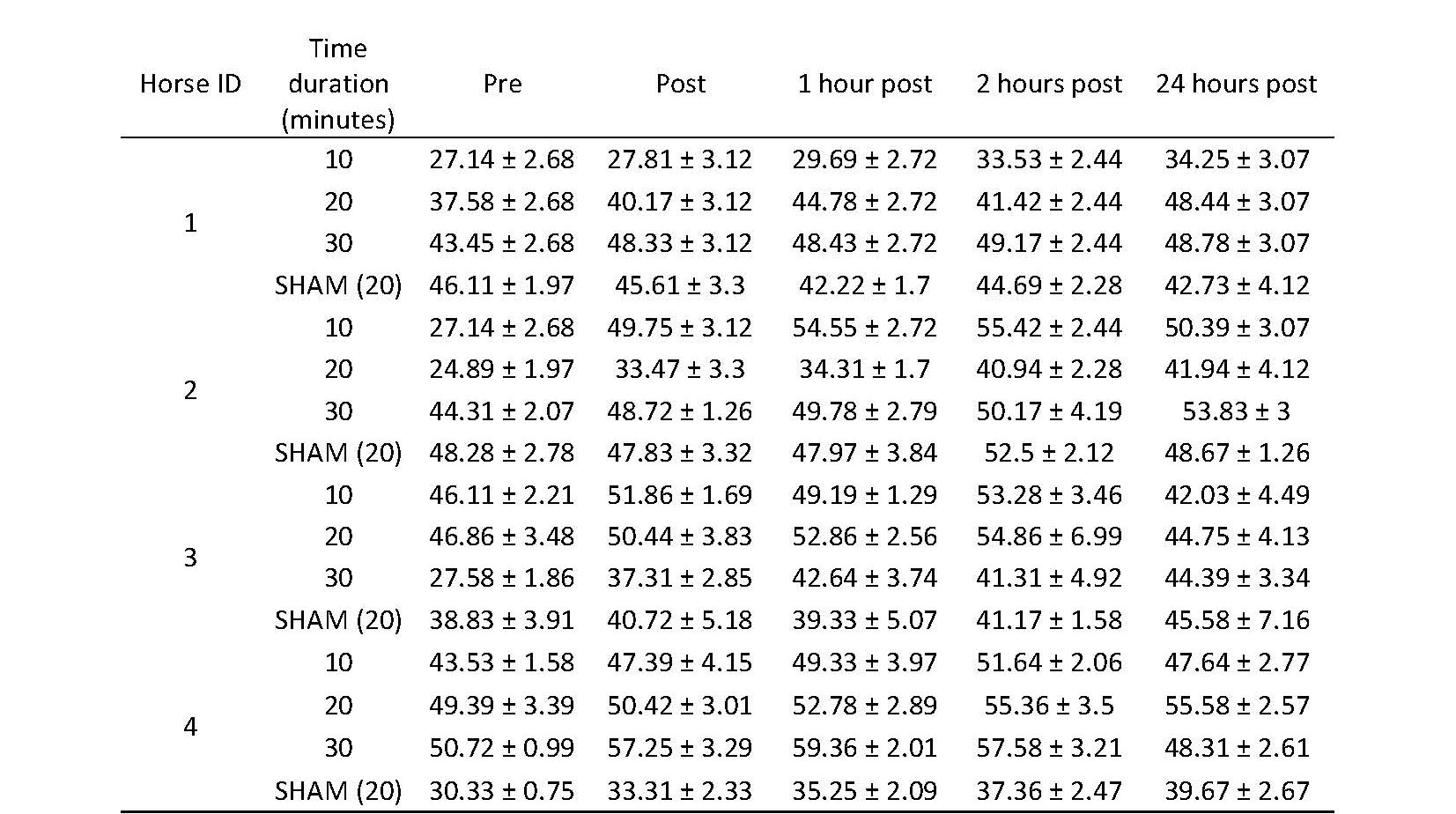
Table: Mean MNT values (N) with ± standard deviation for all readings at all reading intervals for each treatment length for each horse. (Pre – readings prior to treatment, Post – readings immediately after treatment, 1 hour post – readings 1 hour after treatment, 2 hours post – readings 2 hours after treatment, 24 hours post – readings 24 hours after treatment).
Statistical analysis confirmed the data which highlighted the biggest increase in mean MNT value for the 30-minute treatment at all reading intervals, seen in Fig.4, which suggested that the longest treatment had the greatest effect on the Longissimus dorsi muscle. Error bars are seen to be generally smaller for 30-minute treatments than any other treatments which also illustrates that results are more reliable.
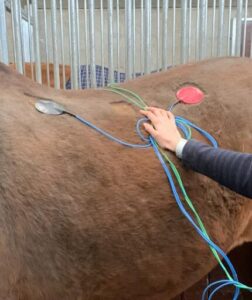
Electrode placement along the Longissimus dorsi muscle during a treatment session.
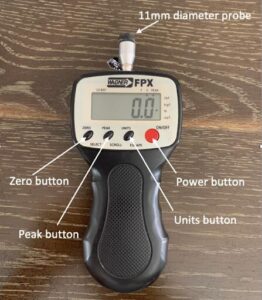
The Wagner pressure algometer used to record mechanical nociceptive threshold (MNT) readings before and after treatment.
What the results showed
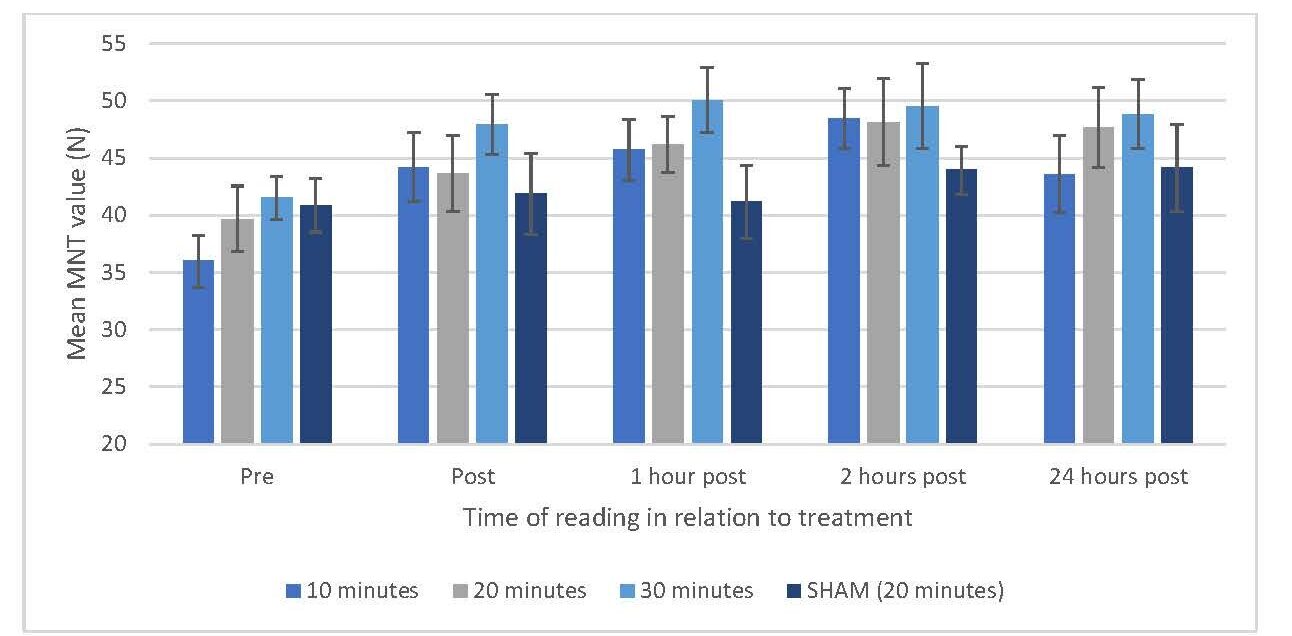
The mean MNT values from all points along the Longissimus dorsi muscle from all 4 horses at different time intervals around treatment including the standard deviation (SD) of all treatment times shown as error bars. (Pre – readings prior to treatment, Post – readings immediately after treatment, 1 hour post – readings 1 hour after treatment, 2 hours post – readings 2 hours after treatment, 24 hours post – readings 24 hours after treatment).
Results, portrayed in Table, highlighted a 22.85% increase in MNT values immediately after 10-minute treatments, 9.95% after 20-minute treatments and 15.37% after 30-minute treatments which were all greater than SHAM treatments. SHAM treatments showed a 2.4% increase in MNT values after treatment which emphasises that treatments worked. 10-minute treatments produced the greatest MNT increase, followed by 30-minute treatments, however, values decreased from the peak reading by 4.89N at 24-hours which was the greatest reduction. 30-minute treatments reduced by 1.22N from the peak reading at 24 hours which shows the benefits from this treatment lasted longer than 10-minute treatments. 20-minute treatments showed a reduction of only 0.47N from the peak value which depicted that the 20-minute treatment effects last the longest within a 24-hour period (Table). All treatments produced higher readings 24-hour post treatment than baseline readings which emphasises their long-lasting effects. 20-minute treatments produced the greatest difference with 24-hour results being 8N more than baseline.
What this means in practice
Results showed that MNT readings for all treatments (10-30 minutes) peaked at 1-2 hours post treatment and then began to decrease at 24-hours which can be seen in Table. The repeated measures ANOVA found reading intervals to be statistically significant (P<0.001) and the difference between post and all intervals were also significant. The difference between 1-2 hour and 2-24 hour reading intervals were found to be significant, however, the difference between 1 hour and 24-hour post readings was not significant. The MNT values commonly peaked 2-hour post treatment and then gradually decreased.
H-wave therapy has become increasing popular within the medicine profession as a technique to treat pain without involving opioids. Animal studies have emphasised the benefit of H-wave therapy on skeletal muscle due to the significant increase in microcirculation. This study measured the change in MNT values as a result of H-wave therapy treatments from the Trimwave. To the author’s knowledge, this is the first study using H-wave therapy in horses that documents the different benefits from different length treatment times.
The Longissimus dorsi muscle is the largest in the equine back and it plays a crucial role in stabilising the vertebral column to effectively facilitate locomotion. This muscle is constantly in use and likely to be overworked which presents an opportunity for the Trimwave to reduce discomfort. Pain within the Longissimus dorsi muscle is often common with back problems in horses as seen in surface electromyography muscle patterns. Back problems are said to be “one of the most common and less treated problems in the horse” which stresses the need for back muscle treatments, such as H-wave therapy, hence the requirement for this study. These problems are most recognised in working horses with 35-100% of ridden horses experiencing them. Ridden horses are more likely to experience pain within the Longissimus dorsi muscle, however, data suggests that brood mares also experience back pain due to their lordotic posture, ventral deviation of the spine.
Currently there is no suitable grading system to accurately quantify back pain in horses thus providing the need for the pressure algometer to be used when recording data in this study.
Mean algometry readings were not significant between points along the Longissimus dorsi muscle, which is expected as these horses are not ridden, reducing pressure through the saddle regions (mainly T10-T17). Readings were the greatest at all intervals for 30-minute treatments, however, individuals often became restless for the last 10 minutes. This may be due to boredom which justifies a shorter treatment time. TENS is often initially administered for 15-20 minutes to reduce anxiety and application times are gradually increased as they acclimatise to treatment. This may have been advantageous to reduce restlessness from early exposure to treatments longer than 20 minutes. Horses in this study were housed with other horses but individually stabled during treatments and reading periods following which may have caused this restlessness; a stress response to social isolation. This may have affected results and requires further research; however, this implies that the 30-minute treatment is less feasible for use within the equine physiotherapy field.
A note on the study's scope
A 20-minute treatment would be most effective as a standard treatment time as horses respond better when stood still for only 20 minutes whilst achieving long-lasting effects from treatment. 20-minute treatments were statistically significant from all application times and benefitted individuals the longest due as 24-hours post treatment readings were 8N more than baseline readings; the greatest value compared to other times. This demonstrates the benefit of 20-minute treatments compared to the 30-minutes as it is less time consuming, more tolerable for the horse, and produces longer lasting effects. Statistical analysis confirmed that 30 minutes had a small significance compared to 20 minutes; 20-minute application appears the most viable in professional practice. Previous studies observing H-wave therapy used 60 minutes, twice daily, which is greater than this study, and significant results were also produced. This study determined that treatment times could be 30 minutes or less and still produce significant results which reduces the time horses are required to stand still. Future studies could observe the significance following treatments of 30-60 minutes compared to 30 minute or less to determine if longer treatments are beneficial or if shorter times are optimal.
Other studies have utilised 2Hz or 60Hz as a frequency instead of 30Hz that was used within this study which implies there is little data on H-wave therapy at a variety of frequencies, particularly at 30Hz, along with treatment lengths. A study done in 1999 highlighted that no differences were observed between the 2Hz and 60Hz frequencies which provides an area to target for future studies and this could also allow 30Hz to be compared to other frequencies.
The SHAM treatments emphasised the effect of H-wave therapy by causing little/no change in MNT values compared to the other treatments. This supports previous research that resulted in function improvement, including an increased range of motion. These benefits were achieved with long term, repetitive H-wave therapy and in human studies, patients received treatment for 2-6 weeks which resulted in more than 60% of patients with experiencing back pain relief. More frequent treatments will produce greater benefits as accentuated in this study. The mean baseline readings for all horses during their first set of treatments increased from 26.04N to 47.97N, an increase of 21.93N, by the final treatment which emphasises the long-lasting effects from repetitive treatments. This is likely due to treatments working, however, acclimatisation to the pressure algometer may also affect this. Acclimatisation may have caused a slight increase in MNT values overtime for SHAM treatments as adaptation to the algometer is seen in previous studies. Sensitisation is when horses become overly sensitive to repetitive algometer stimulation which may have resulted in low baseline readings whereas habituation is when a response is absent resulting in higher baseline readings for the final treatments. These are likely to have been experienced by individuals in this study and would contribute to the trend of baseline readings increasing between the first and last treatments. Results indicate the need for the wash out period to be re-evaluated as the more exposure to H-wave therapy the greater the effects, so it is likely that a three day wash out period throughout the study was not appropriate. The wash out period should have gradually increased between consecutive treatments; this was not established from the pilot and was beyond the scope of this study. Further research should be conducted on the wash out period and the accumulative effects of multiple H-wave therapy treatments.
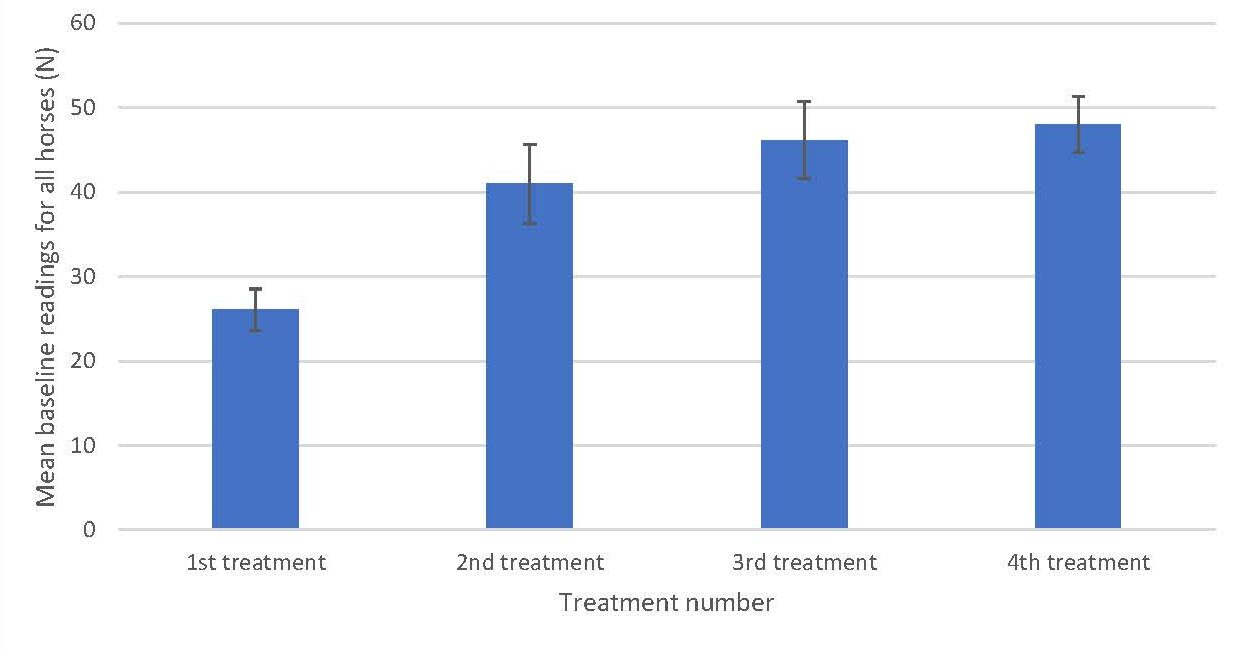
Fig.The mean baseline readings during each treatment over time for all horses. Error bars show standard deviation.
MNT readings are generally measured by the examiner and a second observer records them to ensure readings are blinded, however, this was not adopted for this study. Blinding the readings would have reduced the chance of the examiner being influenced as they would be focusing on the force applied through the algometer and would be distracted from the avoidance responses. The use of one examiner doing both tasks may have been a limitation and further studies should ensure this is blinded.
MNT values were expected to significantly decrease for the 24-hour post treatment readings due to previous H-wave therapy studies, and statistical analysis highlighted no significant difference between the 1 hour and 24-hour readings but a significant difference between the 2 hour and 24-hour readings. This significance following the 2-hour readings emphasises the reduction in MNT values from this point onwards, but previous studies showed significant treatment-mediated effects for up to 5 minutes after treatment. Lack of blinding may be responsible for the high 24-hour readings; however, habituation may have affected these results. Readings taken 2 hours post treatment were generally shown to be the highest and most significant compared to other reading times; suggesting Trimwave effects peaked at 2-hours post and began to reduce after this; confirmed in the statistical analysis. This emphasises a longer period where the treatment is still having positive effects than previous studies. As results tend to last for up to 2 hours post treatment, more frequent treatments, potentially every few days, would create better results as electrotherapies have been recommended for 10 sessions during rehabilitation plans. From this study it is clear to see that more than 4 Trimwave treatments are essential to fully benefit the horse.
There is little data to suggest that the change in intensity would affect results, and for this study the intensity was adjusted accordingly to each individual’s tolerance. Generally, the intensity should be constantly adapted to match individual’s responses to treatment.
However, future studies could keep the intensity the same for all treatments to ensure it is a control factor and this could utilise low intensities, tolerated by all horses, as previous human studies have highlighted significant reductions in pain when using these. Higher intensities are not recommended due to individuals not tolerating them and intensity was adjusted to ensure they were at motor threshold to produce visible twitch contractions.
A statistical significance between treatment times was predicted due to several previous studies comparing SHAM treatments to 30–60-minute H-wave therapy treatments with significant results for the timed treatments. Further research is necessary with a bigger sample size and different varieties of work levels to better understand the benefit of H-wave therapy on back muscles, and different variables such as frequency could be targeted, as treatment lengths are significant. Limitations within this study may have altered the results slightly; these include the size of the pilot study which only used 1 horse and 1 set frequency which provided limited data to effectively create this study. Horses in this study were housed with 5-6 other horses which may have increased social negative behaviours, including aggressive behaviour, lowered head and neck, dominant body position, threat/actual kick/bite, and laid-back ears). This may have resulted in individuals fighting or displaying these negative behaviours in their pen which could cause pain within the muscles targeted if they are injured, resulting in lower MNT values.
Try the Trimwave in your own practice
The Trimwave applied to the Longissimus dorsi muscle for 10-30 minutes results in a significant increase in MNT values compared to SHAM treatments. This significant difference highlights reduced sensitivity through the targeted muscle which demonstrates that longer treatments are not necessary to produce great changes to back muscles as all application times are beneficial. 30-minute treatments produced the greatest change in MNT values, and the most significant results, suggesting longer application times produce better results. The change in MNT values following 20-minute treatments were also significant so shorter treatment times are more feasible to be used to reduce muscle pain. One treatment will not be enough to significantly improve MNT values within the Longissimus dorsi muscle and multiple treatments are more beneficial. Treatment effects peaked 2 hours post treatment and then gradually decreased which emphasises that H-wave therapy effects last for up to 2 hours post treatment. 30 minutes had a small significance compared to 20 minutes; 20-minute application appears the most favourable in professional practice whilst also producing the longest lasting effects. Future studies could use a greater sample size and house horses individually to ensure the treatment is beneficial and they should each receive more than 4 treatments.
Frequently asked questions
What's the best treatment time for Trimwave H-wave therapy on horses?
Based on this study, 20 minutes offers the best balance of effectiveness, tolerance and duration of benefit when treating the Longissimus dorsi muscle, though 30-minute sessions produced marginally greater results where a horse can tolerate the longer session.
How long does H-wave therapy take to work?
In this study, MNT values (a measure of muscle sensitivity) began increasing immediately after treatment and continued to rise for around 2 hours post-treatment before gradually decreasing.
How many Trimwave sessions does a horse need?
More than four sessions were needed to see the full benefit in this study. Because the effects of a single session lasted around 2 hours, the researchers suggest more frequent treatment is likely to build cumulative results.
Is H-wave therapy safe for use on horses?
All treatment times used in this study, 10 to 30 minutes at 30Hz, were well tolerated by the horses involved, with intensity adjusted individually so each horse showed a visible muscle contraction without distress.
Thinking about adding the Trimwave to your equine caseload, or already using one and want to get the settings right? Our team has fitted out physiotherapists and equine therapists across the country and is happy to talk through application times for your own patients. Get in touch with trimbio, or browse the Trimwave range at trimbio.