



Biofreeze comes in three main formats: gel, spray, and roll-on, and the right one often depends less on the product itself and more on how it will actually be used day to day. This guide breaks down the differences so clinics can stock the right format, or combination of formats, and so patients can choose confidently for home use.
What is Biofreeze?
Biofreeze is a topical Cold Therapy product built around menthol as its active ingredient, used widely across physiotherapy and sports therapy to help manage muscle and joint discomfort as part of a wider treatment approach.
It has become something of a household name in clinics across the UK, largely because it is simple to apply, generally well tolerated, and gives patients a practical, active way to manage their own symptoms between appointments.
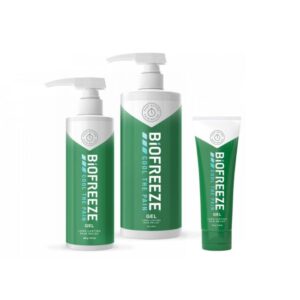
GelThe Gel format allows controlled dosage and is well suited to larger treatment areas, since it can be spread evenly and built up gradually to the desired coverage across a bigger muscle group or joint area. It does require hands-on application though, which some practitioners prefer to avoid between patients for hygiene reasons, making it a format better suited to home use or to clinics with a good supply of gloves and hand sanitiser built into their workflow. |
 |
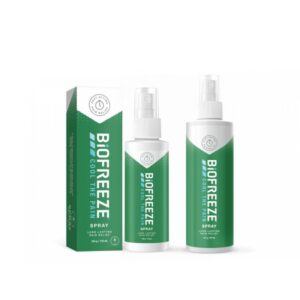
SprayThe Spray format is hygienic and hands-free, making it fast to apply between patients without direct skin contact, which is a significant advantage in a busy clinic seeing back-to-back appointments. It is less precise for pinpointing a very specific small area though, since the spray pattern naturally covers a broader zone than a targeted gel or roll-on application would. |
 |
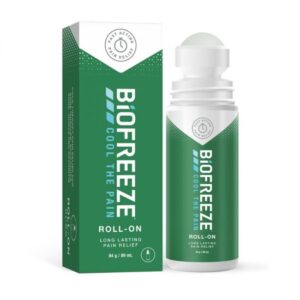
Roll-onRoll-on applicators are targeted, clean to use, and portable, making them a popular choice for patients to carry with them and use throughout the day as needed, for example at work or during travel. They can be slower to cover larger areas compared with gel or spray though, so they suit smaller, more specific treatment zones rather than a broad muscle group needing full coverage. |
 |
Comparison summary
Format, best use case, mess level, speed, and available size all vary across the three options. Gel suits controlled application over larger areas, spray suits speed and hygiene in a clinical setting, and roll-on suits targeted, portable use for patients on the go.
Thinking through where and how the product will actually be used, rather than simply choosing the cheapest option, usually leads to the most practical stock decision for a clinic.
Best for clinic use
Many clinics favour spray for speed and hygiene between patients, particularly during a busy clinic day where turnaround time between appointments matters.
Gel remains popular for larger treatment areas needing more controlled coverage, so many clinics end up stocking both formats side by side to cover different treatment scenarios.
Best for patient home use
Roll-on is often the easiest recommendation for patients to use themselves at home, thanks to its clean, targeted application and general convenience for repeated daily use without mess.
For patients managing a broader area of discomfort at home, a smaller gel tube can also work well, provided they are given clear guidance on how much to use and how to apply it evenly.
Available sizes
Biofreeze is available from small 118ml sizes suited to personal or home use, right up to large 946ml bulk sizes designed for busy clinics with high daily usage across many patients.
Choosing the right size comes down to expected usage volume: a small home-use tube for an individual patient versus a bulk clinic size that will be used dozens of times a week across a full patient list.
How often can you apply Biofreeze?
Follow the guidance on the product packaging for frequency, which is generally designed to allow repeated use throughout the day as needed for ongoing discomfort.
Avoid applying to broken skin or immediately before heat treatment, since combining the two approaches at the same time on the same area is not appropriate given how differently they work.
Contraindications
Avoid use on broken skin, open wounds, or areas of known skin sensitivity, and check for any heat sensitivity before combining with other treatments in the same session.
As with any topical product, a patch test is a sensible precaution for any patient using Biofreeze for the first time, particularly those with a history of sensitive skin.
FAQ
Which Biofreeze format lasts longest?
Larger gel and spray sizes are designed for higher volume clinic use and will naturally last longer given the volume of product involved, while roll-on tubes suit lower frequency personal use and will be used up more slowly for an individual.
Can I use Biofreeze before exercise?
Biofreeze is generally used after activity to help manage discomfort rather than as a warm up product, since its cooling effect is not suited to preparing muscles for exercise in the way a warm up routine is.
Is Biofreeze safe for sensitive skin?
Always patch test first and avoid use on broken skin or known sensitivities. Speak to your practitioner if you are unsure whether it is suitable for your particular skin type or condition.
Can Biofreeze be used with heat therapy?
Biofreeze and heat therapy work on different principles, so they should not typically be combined at the same time on the same area, though they may both have a place at different points in a wider treatment plan.
What is the difference between Biofreeze and Naqi Cooling Gel?
Biofreeze and Naqi Cooling Gel are both cooling gel products used for similar purposes; the choice often comes down to practitioner or patient preference, specific formulation, and how each feels and performs during actual use.
Shop the full Biofreeze and cooling gel range at trimbio, available in gel, spray, and roll on formats.