

Free Delivery over £75 ex VAT
*Excl. Reconditioned Equipment & Medical Furniture

Payment Options Available
We accept Klarna, VISA, Mastercard & AMEX

UK Offices & Warehouse
Dispatched within 2 days. Next-day upgrade:£2.99+VAT

Proud Supplier to the NHS
To Trusts across the United Kingdom
Interferential Therapy

Interferential Therapy
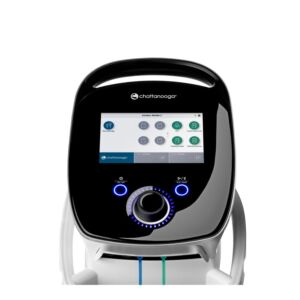
Interferential therapy (IFT) uses two medium-frequency electrical currents that cross inside the body, reaching deeper tissue with less discomfort at the skin than standard TENS. It's used in physiotherapy and rehabilitation for pain relief, muscle stimulation and improved circulation. We stock clinic and handheld interferential units for accelerating healing and relieving pain, plus a reconditioned interferential range for practices working to a tighter budget.
A range of clinic and hand held devices for accelerating healing and relieve pain.

What is interferential therapy?
Interferential therapy, often shortened to IFT, is a type of electrotherapy used in physiotherapy clinics. It sends two electrical currents into the body through pads on the skin. Where the two currents cross underneath the skin, they combine into a single, stronger current. This lets IFT reach deeper tissue than a standard TENS machine, without needing a stronger current at the surface, which makes it more comfortable for the patient.
Physiotherapists use interferential therapy to ease pain, reduce muscle spasm, improve local blood flow, and help clear swelling after an injury. It's a passive treatment: the patient simply feels a light tingling sensation while the machine does the work, usually for 10 to 20 minutes per session.
How is interferential therapy different from TENS?
TENS uses a single current that stays close to the surface of the skin. Interferential therapy uses two currents that cross and combine below the skin, so it can treat deeper structures, like a stiff joint or a deep muscle, more comfortably than TENS can at an equivalent intensity. In practice, many clinics use both: TENS for surface pain, interferential for anything deeper or more widespread.
Interferential Therapy Machines FAQs
What is the difference between TENS and interferential therapy?
TENS uses a single current that stays near the surface of the skin, mainly for surface-level pain relief. Interferential therapy crosses two currents beneath the skin, reaching deeper tissue with less discomfort at the surface, better suited to deeper or larger areas.
What conditions is interferential therapy used for?
IFT is commonly used for musculoskeletal pain, muscle spasm, joint stiffness, and swelling after injury or surgery. It's also used to improve local circulation in the treated area.
How long does an interferential therapy session last?
Most sessions run for 10 to 20 minutes, depending on the condition being treated and the practitioner's protocol.
Is interferential therapy safe? What are the contraindications?
IFT shouldn't be used near implanted electronic devices such as pacemakers, over active malignancy, or during pregnancy without clinical supervision. Always follow the manufacturer's contraindication list for the specific device.
What's the difference between a new and a reconditioned interferential unit?
Our reconditioned units are fully serviced, tested and PAT tested by our in-house engineers before sale, and come with a warranty, at a lower cost than new. New units carry the full manufacturer warranty from day one. Browse the reconditioned interferential range alongside the units on this page.
Can't find what you need? Call our team on 01403 597 597 or contact us online.