

Free Delivery over £75 ex VAT
*Excl. Reconditioned Equipment & Medical Furniture

Payment Options Available
We accept Klarna, VISA, Mastercard & AMEX

UK Offices & Warehouse
Dispatched within 2 days. Next-day upgrade:£2.99+VAT

Proud Supplier to the NHS
To Trusts across the United Kingdom
Walking Sticks

Walking Sticks
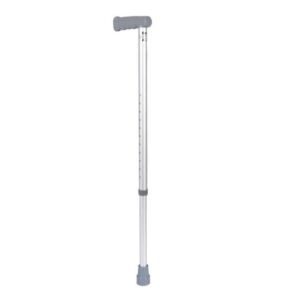
A walking stick is a versatile mobility aid that offers balance, stability, and support for those with pain, weakness, or balance difficulties. Unlike canes designed for long-term medical use, walking sticks are often used for short-term support or recreation. Our walking sticks UK range includes adjustable aluminium and folding walking sticks with ergonomic grips, helping promote a smoother gait and reduce strain on the joints.

Choosing the right walking stick
The right walking stick depends on how it will be used day to day. When looking for overall balance assistance, a stick with an adjustable single point as well as a comfortable grip would be sufficient. In case one is planning to walk for longer distances or even in areas which are rough, a stick with a wide base might provide extra security.
It is important to note that the size of the stick will also have an impact since using a stick which is either too long or too short might affect the posture as well as the wrist, shoulders or the lower back. A stick that's simple to alter on the spot makes it easier to get the height right first time.
Comparing folding and non-folding walking sticks
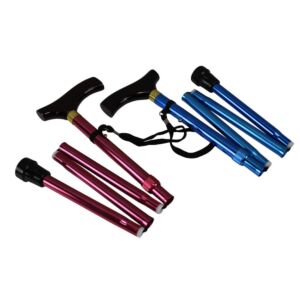
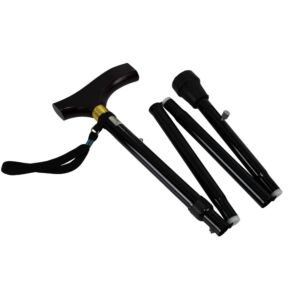
Walking sticks that can be folded, commonly known as folding sticks, have the capability of collapsing into several sections. This means that they can be easily stored in bags, in cars, and even in clinic cabinets when they are not in use. The collapsible walking stick is suited for individuals who may need such an assistive device from time to time.
Fixed adjustable sticks, by contrast, are usually more robust for daily, continuous use, since there are no folding joints to wear over time. If a patient or customer needs a stick for occasional or intermittent use, folding walking sticks are usually the better fit. For full-time daily support, a standard adjustable aluminium stick tends to hold up better long term.
Ferrules: the part that's easy to overlook
The ferrule, which is basically the rubber bottom of the cane, is what makes sure that the walking stick holds on to the floor securely. Walking stick ferrules eventually get worn out from constant use and become ineffective long before the walking stick becomes too old to use, making it a very easy way of ensuring that your walking stick remains safe to use.
We stock a dedicated range of replacement ferrules to fit most standard stick diameters, so there's rarely a need to replace the whole stick when only the tip has worn out.
Ordering for clinics, care settings, and NHS Trusts
trimbio offers walking sticks and mobility aids to NHS Trusts, private clinics, care homes, charities, and directly to the general public. If you are placing an order for a particular department or ward, or a number of patients at once, please get in touch with our team for advice on bulk orders. All orders over £75 ex VAT qualify for free standard delivery, dispatched within 2 working days.
For related mobility support, see our crutches range, or explore the full aids for daily living category for other everyday support products.
Frequently Asked Questions On Walking Sticks
What specific features make ergonomic grips more beneficial for users of walking sticks?
Let's talk about ergonomic grips first. When you pick up one of these walking sticks, you'll notice the handle isn't just a plain round bar; it's shaped, or "moulded," to actually fit your hand. Why does that matter? Well, think about holding something round for a long time versus something shaped to your palm. The moulded grip spreads the pressure across your whole hand instead of digging into one spot, so your hand doesn't get as tired or sore, even after a long walk. It's also a bit wider than a standard grip, which is a real help if you have arthritis or your hand strength isn't what it used to be, since you don't have to squeeze as hard to hold on. On top of that, the shape naturally keeps your wrist in a more relaxed, neutral position, which is part of why the site mentions it helps with a smoother walking gait. And because these handles are made from moulded plastic or wood rather than bare metal, they also feel less slippery and more cushioned in your hand, which again is especially useful if your grip isn't very strong.
How do I choose the right size of walking stick?
Choosing the right walking stick for your needs. A good starting point is height: when standing naturally with arms relaxed at your sides, the top of the stick handle should roughly line up with the crease of your wrist, and your elbow should bend at about 15-30 degrees when gripping it. Getting this wrong is a common cause of poor posture and added strain. Next, consider your body weight against the stick's rated capacity so it can safely bear a portion of your weight, since aluminium sticks like the ones on this page have specific maximum load ratings. Grip style matters if you have arthritis, limited hand strength, or a healing injury, in which case a wider, cushioned, or moulded handle is usually more comfortable than a slim traditional one. If you need extra stability rather than light support, a quad-base or tripod cane might suit you better than a single-point stick. Portability is another factor: folding designs like the wooden-handle model here are easier to store and travel with. Finally, think about where you'll use it most; a stick with a retractable spike is useful for uneven or icy outdoor terrain, while a standard rubber tip suits indoor or paved use. If you have a specific medical condition or balance issue, it's also worth getting advice from a physiotherapist or occupational therapist, since they can assess your gait and recommend the right type and height more precisely than general guidance can. NHS physiotherapy guidance can be really helpful.
Can a walking stick help with balance and stability?
Yes. A stick gives you a third point of contact with the ground, which takes pressure off a weaker leg and helps steady you on uneven ground. It's commonly recommended for anyone managing balance issues, joint pain, or recovering from an injury.
Do walking sticks have a weight limit?
Yes, and it varies by model. Always check the manufacturer's stated weight capacity before choosing one, it's there for a reason, and using a stick beyond its limit affects both safety and how long it lasts.
What are the differences between a walking stick and a crutch?
The walking stick is not supportive but serves for balance purposes and uses one hand while holding it. Crutches are devices that provide support for bearing some body weight and usually come in pairs for use after an injury or operation. Walking sticks are better suited for long-term balance support, not weight-bearing restriction.
What should be the height of my walking stick?
As a rule of thumb, the stick must be as tall as the crease of your wrist while letting your arm hang freely by your side, allowing for some bending of the elbow when using the stick. Using an aluminium walking stick which is adjustable allows you to adjust its length without purchasing a new one.
When should I change the ferrule on my walking stick?
It is important to check the ferrule on your stick frequently for any areas that might appear smooth, cracked or worn out. It will take some time for the aged ferrule to begin to loosen its grip.
How do the folding walking sticks compare with the non-folding walking sticks when it comes to durability?
The well-made folding walking sticks are very durable enough to be used on a daily basis, while the non-folding and adjustable walking sticks are even tougher due to the absence of moving parts.
Do you sell your walking sticks to the NHS and care institutions?
Yes. trimbio is an NHS-approved supplier and regularly supplies NHS Trusts, care homes, and clinics across the UK. For bulk or purchase order enquiries, contact our team by phone or email.