



Shoulder ROM Exercises: Getting the Most from Your Pulley
A shoulder pulley is an effective tool, but like any rehabilitation equipment, the results depend on how it's used. Poor technique, incorrect frequency, or progressing too quickly can all limit outcomes or set a patient back.
This guide covers how to get the most from shoulder ROM pulley exercises, including common mistakes and how to progress correctly.
Getting the technique right
The pulley works by using one arm to assist the other. The keyword is assist, not force. A common mistake is the unaffected arm pulling aggressively, dragging the injured shoulder beyond its comfortable range. This is particularly likely when patients are keen to progress quickly or are interpreting "stretch" as "pain."
Clear patient communication matters here. The sensation should be a gentle pulling stretch at end range, held briefly, then released slowly. Bouncing or jerking movements through the range should be avoided.
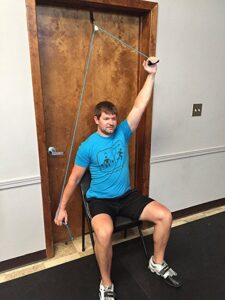 |
Checklist for good technique:
|
Common mistakes to address
Starting range too ambitious.
Particularly in the first two weeks post-surgery, the target range should be conservative and set by the protocol, not by what the patient thinks they should be able to do.
Exercising too infrequently.
Three short sessions spread through the day produce better results than one longer session. ROM responds to regular, gentle stimulus.
Skipping sessions because of discomfort.
Some discomfort is expected and is not a reason to stop. Distinguish between stretch discomfort (normal) and pain (requires assessment).
Using the pulley too long into rehabilitation.
Once the active range has been established, the pulley's role reduces. Continuing passive-assisted work when active motion is available can limit the transition to functional strength.
Progression markers
Progress is typically measured by the available pain-free range at each session. Useful milestones:
- Flexion to 90°: usually achievable within the first 2–3 weeks post-op for most rotator cuff repairs
- Flexion to 120–130: mid-phase target, typically weeks 4–8
- Full or near-full elevation: later phase, timing depends on repair type and surgeon protocol
Abduction range typically lags behind flexion by a few weeks. External rotation, if prescribed, follows its own protocol depending on the nature of the repair.
When to progress beyond the pulley
Once the patient can actively initiate and control movement through the available range, passive-assisted pulley work starts to give way to active-assisted and then active exercise. The pulley remains useful as a warm-up tool and for maintaining gains on rest days, but it should not be the primary exercise indefinitely.
View shoulder pulleys at trimbio — stocked for clinical prescription and home rehabilitation.
Further reading: Shoulder pulley exercises: a complete rehabilitation guide | How to use a shoulder pulley after rotator cuff surgery