



How to Use a Shoulder Pulley After Rotator Cuff Surgery
A shoulder pulley is typically one of the first pieces of home exercise equipment prescribed after rotator cuff repair. Used correctly, it helps restore passive range of motion in the early post-operative weeks when active shoulder movement is restricted and supervised sessions are limited.
This guide covers setup, the basic exercises, and what to expect during use.
Setting up the pulley
Most shoulder pulleys attach to the top of a standard door frame using a hook or over-door anchor. No drilling required.
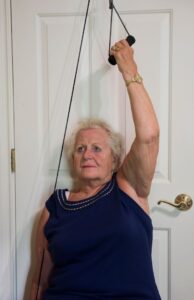
A seated position is recommended for the first few weeks. Sit directly facing the door for flexion exercises, or side-on for abduction. |
 |
The exercises
Your physiotherapist will prescribe the specific range and repetitions appropriate for your protocol. The exercises below are typical starting points.
|
|
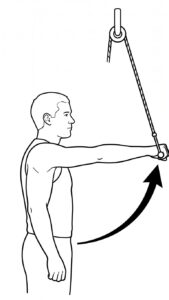
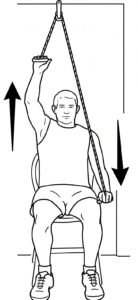
Forward flexionSit facing the door. Hold both handles. Use your unaffected arm to slowly pull the cord down, drawing your operated arm upward. Raise it as far as comfortable; you should feel a stretch, not sharp pain. Lower slowly. Repeat 10 times. |
 |
Side abductionSit side-on to the door, injured shoulder closest. Use the unaffected arm to pull the cord, lifting the injured arm out to the side. Again, a stretch is normal; pain is not. Repeat 10 times. |
Typical starting frequency: 2–3 sets of each exercise, two to three times daily. Your physio will advise on progression.
What to expect
Some discomfort and a pulling sensation are normal. The point of the exercise is to work gently into the available range. Sharp, catching, or significantly worsening pain is a signal to stop and speak with your physiotherapist. Most patients find that the exercises become easier and less uncomfortable within the first couple of weeks as mobility gradually improves.
A note for physiotherapists
When prescribing home pulley use, a brief demonstration at the clinic before discharge significantly reduces the likelihood of incorrect technique. Printed or digital instructions alongside the physical pulley are worth providing, particularly for patients who will be managing independently for stretches between appointments.
Browse shoulder pulleys at trimbio — suitable for clinical prescription and home use.
For more on shoulder pulley exercises and rehab progression, see our complete shoulder pulley rehabilitation guide.