


Resistance Exercise Band
The Trimbio Resistance Exercise Band (trimband and Theraband) category offers a versatile range of premium resistance bands designed for fitness, rehabilitation and therapeutic use. This collection includes latex and latex-free trimband rolls and pre-cut lengths in multiple sizes and resistance levels, ideal for strength training, stretching, mobility work, physical therapy and Pilates routines. Whether you’re a fitness enthusiast, physiotherapist or healthcare professional, these durable resistance bands provide effective, portable resistance tools suitable for home workouts, clinical settings and gym programmes. With easy-to-choose lengths and progressive resistance options, Trimbio’s exercise bands help support users in improving muscle strength, flexibility and functional movement.

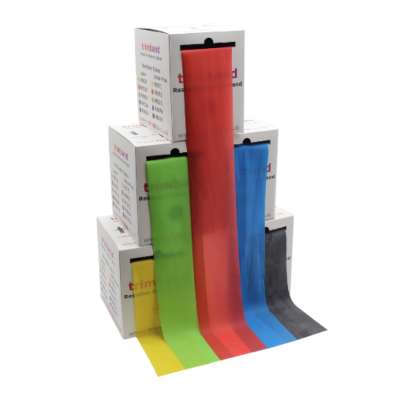
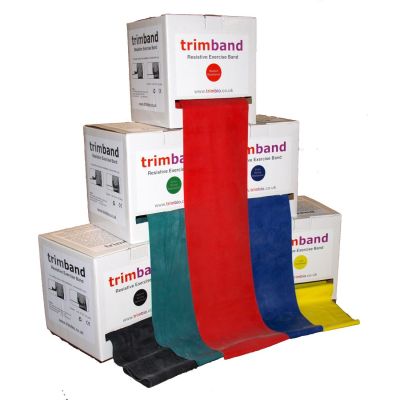
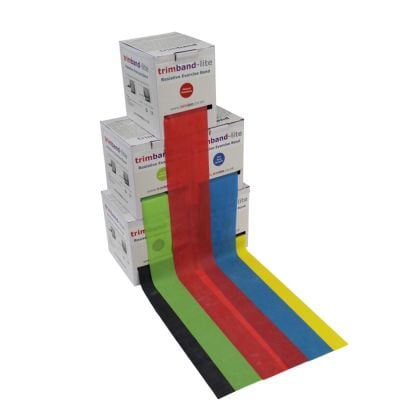
- trimband 45.7m (50 yards) Length Dispenser Box - Latex FreeSKU: RE071GMore detailsAs low as £53.94 £44.95
-
- CLEARANCE MVS Resistive Exercise band 45.7m (50 yards) Length Dispenser BoxSKU: RE340GMore detailsAs low as £76.74 £63.95
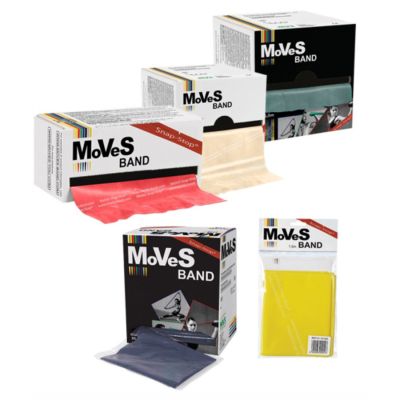

Resistance Exercise Bands for Clinical Strength, Mobility and Rehab Work
Resistance exercise bands earn their place in a clinic because they are easy to progress, easy to use and simple for patients to keep using outside of a clinic. For rehab plans, mobility work and strength-building, they give practitioners a practical way to load movement without relying on large equipment or complicated setups.
For clinics using bands every day, a resistance band roll is usually the most efficient option. It allows you to cut lengths to suit the exercise, the patient and the stage of progression. Shorter lengths can work well for controlled upper limb work, while longer lengths give more flexibility for lower limb exercises, assisted movement and home programmes.
Theraband, trimband and similar clinical exercise bands are especially useful when you need clear progression. Colour-coded resistance levels make it easier to move a patient through a programme without changing the exercise completely. That consistency matters when you are trying to track improvement, reduce confusion and keep exercises repeatable between sessions.
Latex-free bands are also worth keeping available in professional settings. They help avoid unnecessary issues for patients with sensitivities and make it easier to supply bands confidently across a wider range of users.
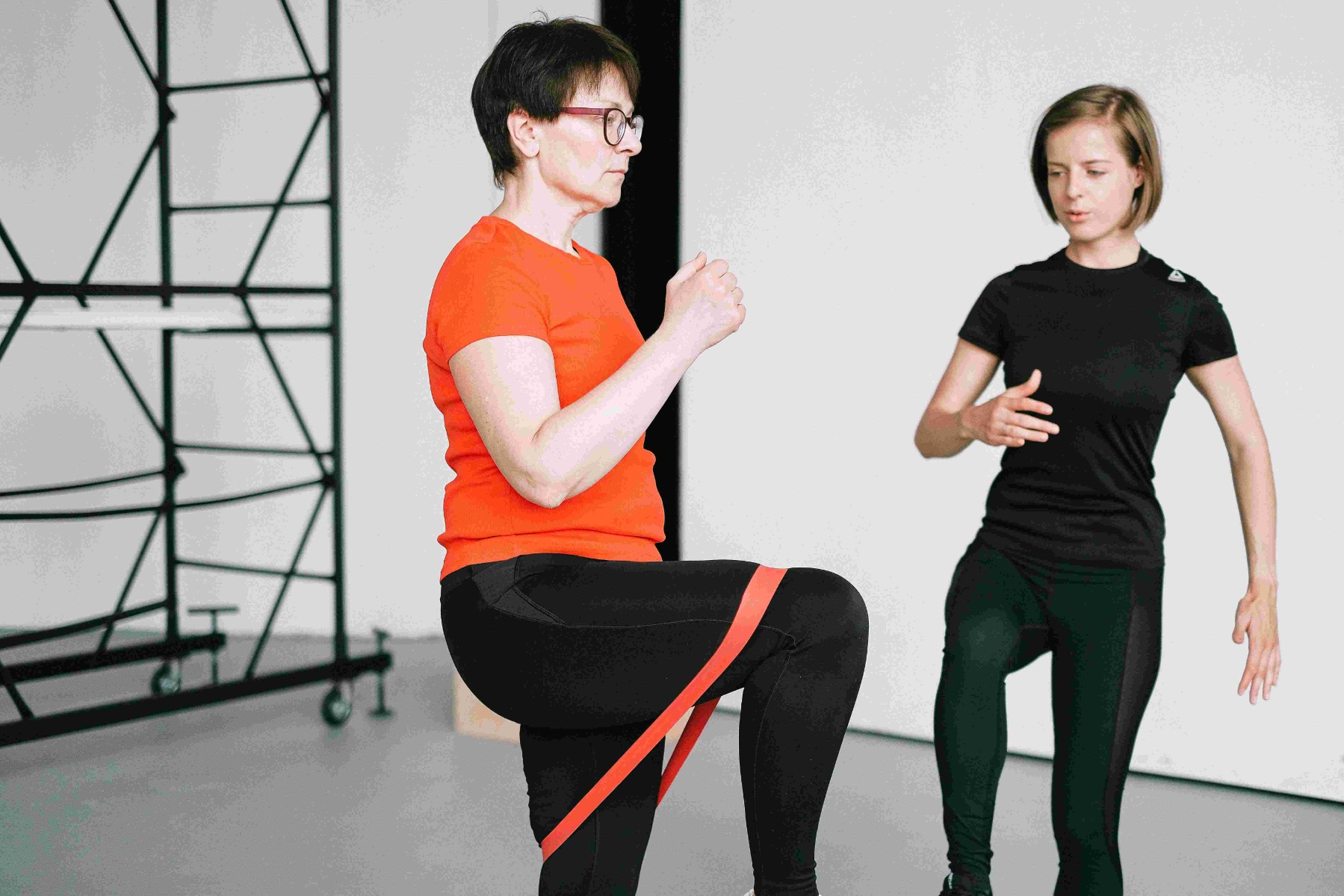
Theraband, trimband and resistance band rolls: choosing and anchoring them properly
Theraband vs trimband: what's actually different
Theraband is the original colour-coded elastic resistance system, introduced by the Hygenic Corporation and still the name most patients recognise. Trimband is our own version of the same system: latex and latex-free, the same colour progression from light to heavy, at a lower cost per metre for practices buying in volume.
Both work on the same principle. Resistance comes from how far the band is stretched, not just its colour, so swapping from Theraband to trimband doesn't mean retraining anyone. Home exercise sheets, colour charts and clinic notes all stay consistent.
Buying resistance bands by the roll
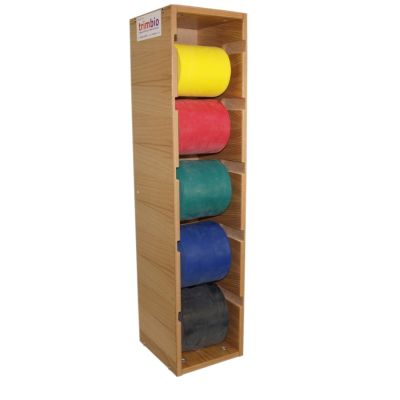
A roll is the most economical way to stock a department. It works out cheaper per metre than pre-cut lengths and lets you cut to the exact length each exercise needs, rather than rounding up. Our trimband rolls and patient pre-cut lengths run from 1m up to 45.7m, in both standard latex and latex-free, and the trimband rolls 45.7m option comes with a wall-mountable wooden dispenser holding all five colours.
Anchoring a band safely
Most band exercises need a fixed point to pull against, and a door anchor is the simplest way to create one without putting anything through the wall. It loops onto the band at one end, with a solid bulb that locks between the door and frame at the other, giving a stable anchor for rows, presses and pull-aparts at any height.
For exercises that need a lower or floor-level anchor, a universal assist strap works around a foot, bannister, or wall fitting instead. Whichever you use, check the anchor is locked in place before the patient applies full tension, and avoid doors that don't close fully or have a weak frame.
Resistance Band FAQs
How often should resistance bands be replaced?
Replace bands when they show visible wear, thinning, cracking, small tears or reduced elasticity. In clinics, bands used repeatedly should be checked often, especially if they are shared, cut from rolls or used with anchors. Typically, the band should be replaced after 18 months from new.
What's the difference between resistance bands, loops and tubes?
Bands are flat lengths cut from a roll, resistance band loops are a continuous circle (useful for glute and hip work), and resistance exercise tubes are round, that can attach to handles and are generally used for pulling exercises.
When should a resistance band door anchor be used?
A resistance band door anchor is useful when the exercise needs a fixed point. It can support pulling, rotational and lower limb exercises, especially in home programmes where fixed equipment is not available.
Which brand of resistance band is good?
Theraband dispenser boxes are one of the most trusted resistance band brands for physiotherapy, rehab and exercise programmes. It offers clear colour-coded resistance levels, making it easy to progress exercises safely. However trimband is also a trusted choice but at an not cost effective price point, ideal for clinics that need reliable bands for regular strengthening, stretching and mobility work.
Whether you call them 11-piece resistance bands set, exercise bands, Therabands or just bands, they're all working on the same elastic resistance principle. If you're not sure which product fits a particular exercise, get in touch, and the team can talk through what suits your setup.