



Best NMES Machines in the UK: A Professional Buyer's Guide
Choosing the right NMES machine comes down to matching the specification to your caseload rather than simply picking the model with the most features on paper. This guide covers the key specification points, safety checks, and budget considerations that matter most to UK clinics buying an NMES unit for the first time or upgrading an older one.
What makes a good NMES machine?
Look at the number of channels, available waveforms, portability, and build durability together rather than any single feature in isolation. A machine designed for daily clinical use should be able to withstand regular handling between treatment rooms or between sites without settings drifting or connections becoming unreliable.
It is also worth considering how intuitive the interface is in practice. A machine with a confusing menu structure slows down every single session, while a well laid out control panel lets a busy clinician set up a treatment quickly between patients without hunting through submenus.
Clinical vs portable models
Clinical units tend to offer more precise parameter control and are suited to a fixed treatment room, where reliability and repeatability across dozens of patients each week matter most. These units are often built with a slightly heavier, more robust chassis reflecting their fixed location.
Portable models are designed for practitioners who travel between clinics or treat patients at home, prioritising battery life, compact size, and a simpler Carry Case over the absolute maximum in parameter flexibility. Many practitioners end up owning one of each, depending on how their week is split between fixed and mobile work.
Key features to compare
Number of channels, preset programmes for common conditions, the level of parameter control available, and compatibility with different electrode types all affect how versatile the machine will be in practice, and how easily it fits around your existing stock of accessories.
It is worth listing out the conditions you treat most often and checking that a shortlisted machine has sensible presets, or at least enough manual control, to cover them properly before committing to a purchase.
Single vs dual channel
| A single channel unit can only stimulate one muscle group at a time, which is adequate for some single-limb or single-muscle rehab needs; they tend to come at a lower price point as a result.
A dual channel unit allows two areas to be treated simultaneously, which is useful for bilateral conditions, larger treatment areas, and also to treat antagonistic and agonistic muscles, which is ideal to help build balanced functional control. |
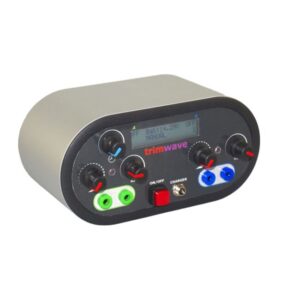 |
| Trimwave H-wave Therapy |
Important safety certifications
Always check for CE marking as a Medical device and confirm the unit is classed appropriately as a medical device before purchase, as this will ensure it has been tested and complies with UK and European regulations.
Ask your supplier directly for documentation confirming these certifications rather than relying on marketing copy alone, and keep a copy on file as part of your clinic's own equipment records.
Budget guide
Entry-level units suit low caseloads or single practitioners just starting to offer NMES as part of their treatment options, and represent a sensible way to trial the modality without a large upfront commitment.
Mid-range machines offer a good balance of features for busy clinics treating a steady flow of rehab patients, while professional clinic-grade units suit high-volume practices needing maximum reliability, more channels, and a wider range of programmes across a demanding daily schedule.
Accessories to factor in
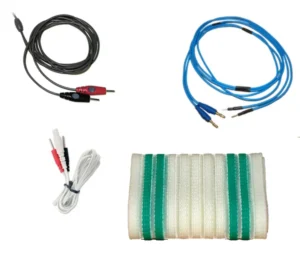
Budget for electrodes, leads, conductive gel as ongoing running costs, not just the upfront price of the machine itself, since these consumables add up meaningfully over a year of regular use.
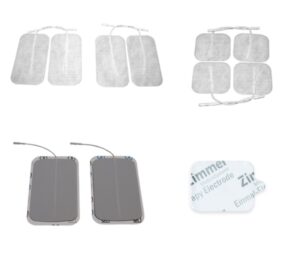
Electrodes in particular have a limited lifespan and are now Single Patient Use to stop cross infection, they also need replacing regularly to maintain good adhesion and a comfortable, effective contraction, so factor this into your ongoing budgeting from day one.
 |
 |
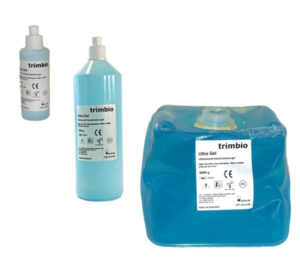 |
| Self Adhesive Electrodes | Patient Leads & Straps | Ultrasound & Conductive Gels |
Questions to ask before buying
Ask about warranty length, whether service support is available in the UK, and how easily spare parts can be sourced if something needs replacing, since a machine that cannot be repaired locally can mean lengthy downtime.
It is also worth asking whether training or setup support is included, particularly if this is your clinic's first NMES unit and your team is still building confidence with the modality.
FAQ
What is the average price of a clinical NMES machine in the UK?
Prices vary widely depending on channels and features, from entry-level portable units through to professional multi-channel clinic systems, so it is worth comparing specifications against your actual caseload before choosing, rather than defaulting to the most expensive option available.
Do I need a dual channel machine?
If you regularly treat bilateral conditions or larger muscle groups, or you are looking to treat antagonistic and agonistic muscles, which helps build balanced functional control, then dual channel is worth the investment and will likely pay for itself in time saved. Single channel units are fine for more targeted, single-area work.
Is servicing available for NMES machines in the UK?
Yes, trimbio offers servicing and repair support for a wide range of electrotherapy devices, which is worth factoring into your total cost of ownership when comparing suppliers rather than looking at purchase price alone.
What electrodes work best with NMES?
Good quality self-adhesive electrodes designed for the specific pulse width and current of your machine will give the most reliable, comfortable contraction, and are worth sourcing from a supplier who understands electrotherapy compatibility rather than a generic consumables catalogue.
Should I buy new or reconditioned?
Reconditioned units can offer significant savings if they come with a proper service history and calibration check, and are worth serious consideration for clinics on a tighter budget or just starting to build out their electrotherapy offering.
Explore trimbio's NMES range, and get in touch about servicing or repair options for existing units.