


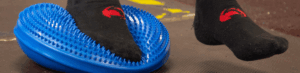
What is a Wobble Cushion? Benefits, Uses and How to Choose One
A wobble cushion is a simple piece of equipment with a genuinely wide range of clinical uses, from ankle rehab to core activation to general posture improvement for anyone who spends long periods sitting still. Here is what it does, who uses it, how it fits into a progressive training programme, and how to choose one that will hold up to regular clinical use.
What is a wobble cushion?
| A wobble cushion is an air-filled disc, usually made from durable PVC, that creates an unstable surface to stand or sit on. The instability forces the body to constantly make small corrections to stay balanced, whether the person is standing on it during a rehab exercise or simply sitting on it at a desk.
Most cushions include small rubber nodules on the surface, which double up as a gentle sensory input underfoot or under the seated surface, adding a further layer of feedback on top of the balance challenge itself. |
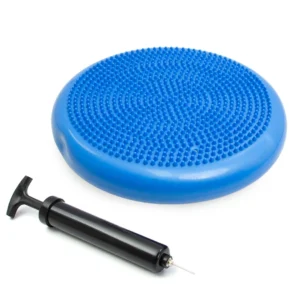 |
| Wobble Cushion 33cm Diameter |
How it works physiologically
Standing or sitting on an unstable surface challenges proprioception, the body's sense of joint position and movement without needing to look. Training on a wobble cushion helps sharpen this feedback loop between the joints, muscles, and brain, which is exactly the system that tends to be disrupted after an injury such as an ankle sprain.
Over repeated sessions, this retrains the speed and accuracy of the body's automatic balance corrections, which is a large part of why Proprioceptive Training is considered so important in reducing the risk of repeat injury once a patient returns to sport or normal activity.
Clinical benefits
Wobble cushions are used for ankle rehabilitation following sprains, knee stability work, core activation exercises, and general posture improvement for people who sit for long periods at a desk or in a vehicle.
They are also a popular tool in fall prevention programmes for older adults, since improving reactive balance control can meaningfully reduce the risk of a fall in everyday situations such as stepping off a curb or turning quickly.
Who uses them?
Physiotherapists and sports therapists use wobble cushions as part of structured rehab programmes, often progressing patients through a series of exercises over several weeks as balance and confidence improve.
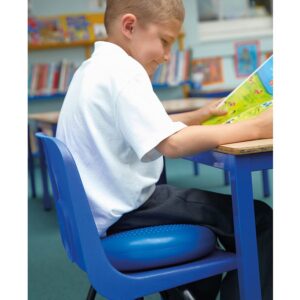
Schools use them for active seating to help children with concentration and core engagement during lessons, while office workers use them to encourage subtle movement throughout the day rather than sitting completely still for hours at a time.
How to use one
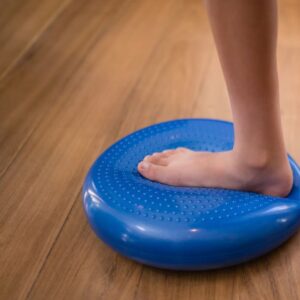
| Standing exercises typically start with two feet on the cushion before progressing to single leg balance, which significantly increases the difficulty and the demand on the ankle and hip stabilising muscles. | Seated use is common for active sitting, and progression usually moves from beginner double-leg work to advanced single-leg or eyes-closed variations, with added arm movements or a ball toss sometimes introduced for higher-level athletes returning to sport. |
 |
 |
Wobble cushion vs balance board
| A wobble cushion offers multi-directional instability that changes with body weight distribution, meaning the surface can tip in any direction depending on how the person shifts their weight.
A balance board tends to tip on a fixed axis, offering a more predictable, single-plane challenge. Both have a place in a progressive balance programme, and many clinics use a board for early-stage work before introducing the less predictable challenge of a wobble cushion. |
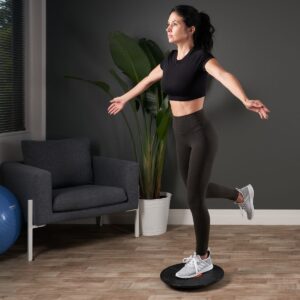 |
| Body Wobble Balance Board |
What to look for when buying
Check the size suits the intended user, the firmness level matches the exercise difficulty required, however most cushions are filled with air that can be added or released to change the difficulty of use, and the base has enough grip to stay in place on different flooring or seating types.
For clinics treating a wide range of patients, it is worth stocking more than one firmness level so beginners and more advanced patients can both be progressed appropriately without needing to buy replacement equipment later.
Cleaning and maintenance
| Wipe down after each use with a suitable disinfectant compatible with PVC surfaces, following your clinic's normal infection control protocol between patients.
Check regularly for punctures or wear that could affect stability during use, and keep a spare cushion on hand so a single damaged item does not disrupt a full day of scheduled rehab sessions. |
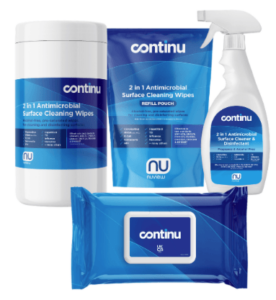 |
| Continu 2in1 Surface Cleanser and Disinfectant |
FAQ
Can I use a wobble cushion while working?
Yes, many people use a wobble cushion on their office chair to encourage subtle core engagement and reduce the effects of prolonged sitting. It is best introduced gradually, starting with short periods, so the body can adjust to the new demand comfortably.
Is a wobble cushion good for back pain?
It can help by encouraging core activation and better postural awareness throughout the day. It should be used alongside wider advice from a physiotherapist rather than as a standalone treatment for back pain, since the underlying cause still needs proper assessment.
How firm should a wobble cushion be?
Firmness is usually adjustable by altering the amount of air inside. Softer inflation increases instability and difficulty, making it suited to more advanced users, while firmer inflation is more suitable for beginners or anyone using the cushion for gentle seated support.
Can children use wobble cushions?
Yes, they are commonly used in schools for active sitting and to support core strength and concentration, provided the size is appropriate for the child and use is supervised where needed.
How do I progress wobble cushion exercises?
Start with two-footed standing or sitting balance, then progress to single leg stands, added arm movements, or closed-eye balance as strength and control improve, always working within a level that feels challenging but controlled rather than risky.
Browse trimbio's balance and proprioception equipment range to find the right wobble cushion for your practice.