

Free Delivery over £75 ex VAT
*Excl. Reconditioned Equipment & Medical Furniture

Payment Options Available
We accept Klarna, VISA, Mastercard & AMEX

UK Offices & Warehouse
Dispatched within 2 days. Next-day upgrade:£2.99+VAT

Proud Supplier to the NHS
To Trusts across the United Kingdom
Rehabilitation Exercise Equipment
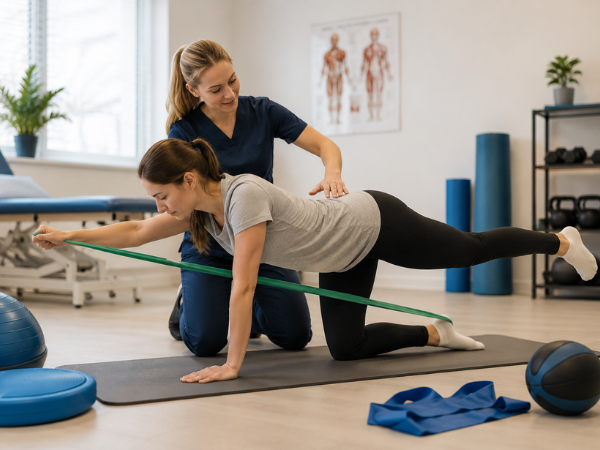
Support strength, balance, mobility and controlled movement with rehabilitation exercise equipment for clinic, therapy and home exercise programmes. trimbio supplies practical rehab tools for physiotherapists, sports therapists, rehabilitation professionals and patients following guided exercise plans.
Our range includes resistance bands, resistance tubing, wobble cushions, peanut balls, shoulder pulleys, balance pads and accessories designed to support progressive movement and everyday rehabilitation work.
Strength, Balance and Mobility Support
Rehabilitation exercise equipment can help patients rebuild strength, improve stability and work through controlled movement patterns. Simple tools such as resistance bands, balance cushions and exercise balls are widely used because they are adaptable, easy to introduce and suitable for different stages of recovery.
For clinics, these products are useful across a wide range of treatment plans. For home programmes, they give patients practical ways to continue their exercises between appointments, as advised by their therapist.
Find What You Need Here
Resistance Bands and Exercise Tube
Progressive resistance for strengthening, mobility and rehab work.
Shop Now >Balance and Stability Equipment
Wobble cushions and foam balance pads for controlled stability and proprioception work.
Shop Now >Peanut Balls and Exercise Balls
Peanut balls and exercise balls for positioning, core control and guided movement work.
Shop Now >Shoulder Pulleys and Mobility Tools
Simple rehab tools to support controlled upper limb movement and range-of-motion exercises.
Shop Now >Patient and Rehab Products
trimbio offers a practical range of rehabilitation exercise equipment whatever stage the patient is at.
Frequently Asked Questions
What equipment is used for rehabilitation exercises?
Common rehabilitation exercise equipment includes resistance bands, resistance tubing, wobble cushions, balance pads, peanut balls, shoulder pulleys and exercise accessories. The right choice depends on the exercise goal, ability level and whether the product is being used in a clinic or home programme.
Can resistance bands be used for rehabilitation?
Yes, resistance bands and resistance tubing are commonly used in rehabilitation exercise programmes. They allow progressive strengthening exercises and can be adapted to different body areas and ability levels.
What is a wobble cushion used for?
A wobble cushion is often used for balance, posture, proprioception and stability exercises. It can add controlled instability to seated, standing or rehab-based movements.
What is a peanut ball used for in rehabilitation?
A peanut ball can support positioning, core control, mobility work and guided movement exercises. Its shape provides more stability than a round exercise ball, which can make it useful in rehab settings.
What is a resistance band door anchor used for?
A resistance band door anchor helps secure a resistance band or tube to a door, creating more exercise options for upper body, lower body and mobility exercises.
From The Blog
Resistance Band Strength Levels Explained
How to match resistance to a patient's stage of recovery and progress them over time.
Wobble Cushion vs Balance Pad: Which Should You Choose?
Comparing instability levels, use cases and how to introduce each into a rehab plan.
Peanut Ball vs Exercise Ball: What's the Difference?
Shape, stability and where each is better suited within a rehabilitation setting.
Using a Shoulder Pulley in Rehabilitation: A Practical Guide
How shoulder pulleys fit within a guided range-of-motion programme and what to look for.
Setting Up a Home Rehabilitation Programme
What equipment patients need to continue their recovery between clinic appointments.
Progressive Rehabilitation: Building Strength Safely
How to structure a progressive exercise plan using resistance and balance equipment.